Understanding Inflation Data: Key Indicators and Market Impacts
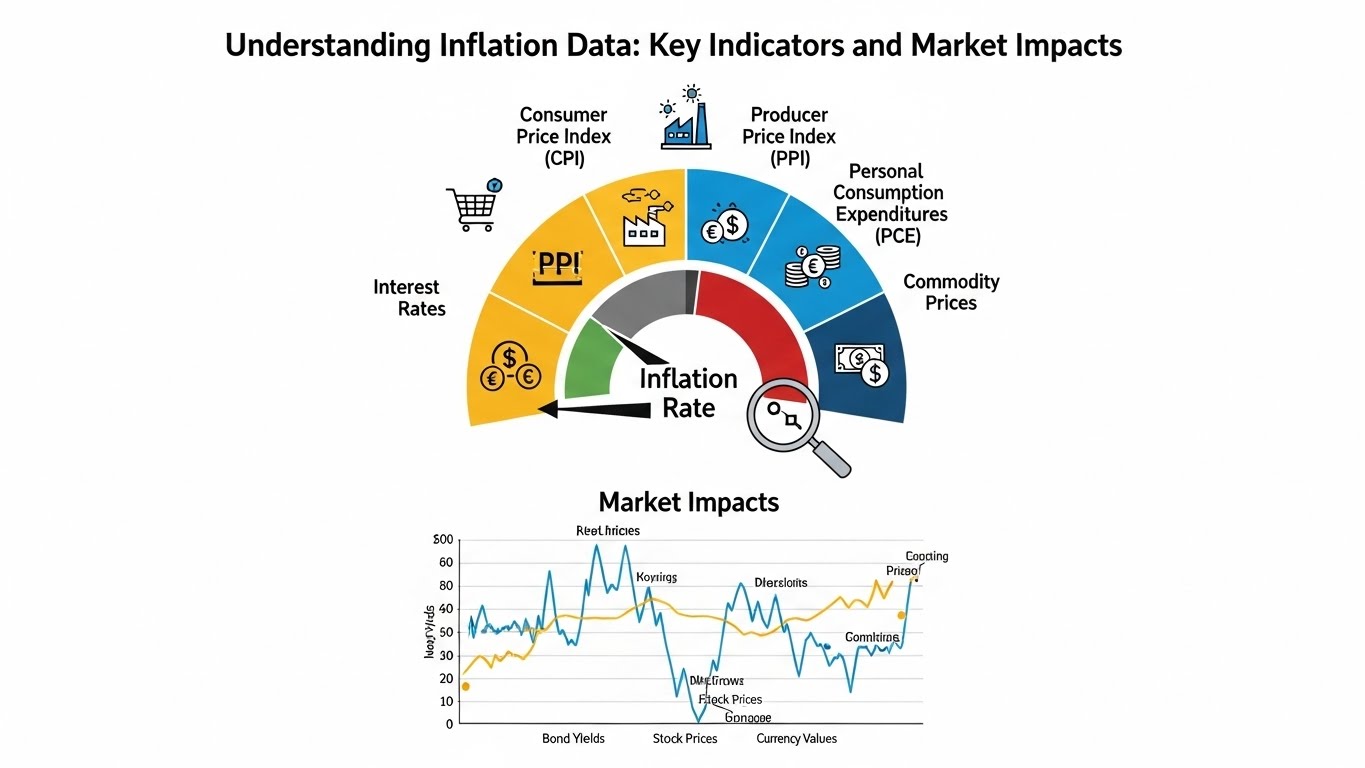
Inflation, the rate at which the general level of prices for goods and services rises, eroding purchasing power, is central to economic health. Various indicators of inflation reflect trends in the economy, keeping businesses and policymakers informed. Understanding these indicators is crucial for anticipating market impacts. This article delves into essential inflation indicators and their implications for markets.
Key Inflation Indicators
-
Consumer Price Index (CPI)
The CPI is the most recognized measure of inflation, representing the average change over time in the prices paid by urban consumers for a market basket of consumer goods and services. It covers categories such as food, clothing, housing, and transportation. The CPI is vital for indexing wages, pensions, and social security benefits.- Core CPI: Excludes volatile items like food and energy, providing a clearer view of underlying inflation trends. Investors often pay close attention to this metric as it can forecast the Federal Reserve’s policy direction.
-
Producer Price Index (PPI)
The PPI measures the average changes in selling prices received by domestic producers for their output. It acts as a leading indicator for CPI, as higher costs for producers can lead to increased consumer prices. The PPI covers three major industry sectors: manufacturing, agriculture, and services. -
Personal Consumption Expenditures Price Index (PCE)
The PCE index reflects changes in the price of goods and services consumed by individuals. The Federal Reserve prefers the PCE over the CPI for its inflation target because it adjusts for changes in consumer behavior, providing a more comprehensive view of inflation dynamics. -
GDP Deflator
This is a broader measure of inflation encompassing all goods and services produced in the economy. Unlike CPI and PPI, which focus on specific baskets of goods, the GDP deflator captures the price change of all final goods, making it an essential metric for economists assessing overall economic performance. -
Employment Cost Index (ECI)
The ECI measures changes in the cost of labor, which impacts inflation as businesses respond to rising wage costs by increasing prices. Regular increases in the ECI can indicate that inflation may accelerate, affecting interest rates and market sentiment. - Consumer Confidence Index (CCI)
While not a direct measure of inflation, the CCI assesses consumer sentiment regarding the economy’s current and future conditions. High consumer confidence can lead to increased spending, driving prices higher, thus indirectly influencing inflation.
Market Impacts of Inflation Data
Inflation data plays a critical role in shaping market dynamics. Investors, policymakers, and businesses closely monitor these indicators to make informed decisions.
-
Interest Rates and Monetary Policy
Central banks, particularly the Federal Reserve, adjust interest rates based on inflation data. Higher inflation often prompts rate hikes, increasing borrowing costs. Conversely, low inflation might lead to lower rates, spurring economic activity. Investors anticipating changes in monetary policy often adjust their portfolios, leading to fluctuations in stock and bond markets. -
Asset Valuation
Inflation impacts the valuation of assets. Fixed-income securities, such as bonds, are particularly sensitive to inflation. As inflation rises, the real return on bonds decreases, leading to lower prices. Equity markets can also react to inflation data—certain sectors like utilities and consumer staples might perform well during inflationary periods, while growth stocks may see increased volatility. -
Sector Rotation
Inflation trends influence sector performance and investment strategies. For instance, during rising inflation, sectors such as energy and materials typically flourish due to increased commodity prices. In contrast, sectors reliant on discretionary spending may suffer as consumers tighten their budgets in response to rising prices. Investors often shift their holdings based on expected inflation trends to capitalize on these movements. -
Currency Value
Inflation significantly affects currency valuation. A country with higher inflation tends to see a depreciation in its currency value relative to others. Investors may shift to currencies perceived as more stable, affecting foreign exchange markets. Central banks’ responses to inflation can further influence currency dynamics. - Long-Term Economic Growth
Sustained inflation can erode consumer purchasing power, hindering economic growth. Businesses may struggle with increased costs and may be unable to pass those costs on to consumers, squeezing profit margins. This dynamic can lead to decreased investment activity and lower economic output over time.
Understanding Inflation Expectations
Market players also focus on inflation expectations, which can shape pricing behaviors and financial market conditions. Inflation expectations are often measured through:
-
Break-even Inflation Rates: The difference between nominal yields on government bonds and inflation-protected securities indicates market expectations for future inflation. A rising break-even rate suggests increasing inflation expectations.
-
Surveys: Regular surveys conducted by institutions, such as the University of Michigan, gauge consumer expectations regarding future inflation. These expectations can influence consumer behavior and spending patterns.
- Financial Instruments: Inflation-linked bonds, such as Treasury Inflation-Protected Securities (TIPS), provide insights into market expectations for inflation. If demand for TIPS increases, it may indicate rising inflation fears among investors.
Conclusion
Inflation data, with its array of key indicators, plays a pivotal role in the functioning of financial markets. Understanding these indicators, from CPI and PPI to broader measurements like the GDP deflator, allows investors and policymakers to navigate economic landscapes effectively. The interplay between inflation and other economic factors creates a complex matrix that requires attention to detail and ongoing analysis. As inflation trends evolve, their market impacts will continue to shape decisions across sectors and asset classes.