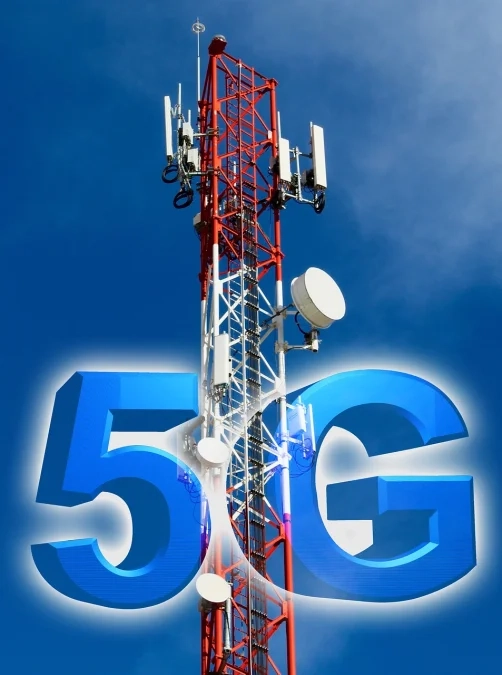
Understanding the Key Differences Between 5G and 6G Wireless Technology
Technology Evolution
The transition from 5G to 6G wireless technology represents the natural progression of mobile communication systems aimed at enhancing speed, capacity, and overall user experience. While 5G has established a robust foundation, 6G is envisaged to build on these strengths by introducing transformative features that redefine connectivity.
Speed and Efficiency
5G technology boasts impressive download speeds, typically ranging from 1 Gbps to 10 Gbps, depending on the deployment scenarios. Designed primarily to improve mobile broadband, it reduces latency to the low-millisecond range. In contrast, 6G anticipates download speeds exceeding 100 Gbps, with projections reaching up to 1 Tbps. This exponential speed increase facilitates the transmission of higher-resolution content, such as 8K videos and immersive virtual reality experiences.
Latency Improvements
Latency, the delay between sending and receiving data, is a critical factor in user experience. While 5G aims for latency as low as 1 millisecond, 6G is targeting sub-millisecond latency. This near-instantaneous response time is particularly advantageous for applications requiring real-time interactions, such as remote surgery, autonomous vehicle navigation, and augmented reality (AR).
Capacity and Connectivity
5G networks have the capacity to support up to 1 million devices per square kilometer, which addresses the massive growth of connected devices within the Internet of Things (IoT). Conversely, 6G is set to enhance this capacity further, accommodating over 10 million devices per square kilometer. This vast increase will be essential for smart cities and future technological ecosystems where a plethora of devices must communicate seamlessly.
Spectrum Utilization
5G primarily operates in low-band, mid-band, and high-band frequency ranges, utilizing frequency bands from 600 MHz to 100 GHz. 6G is expected to expand this spectrum significantly, even venturing into terahertz (THz) frequencies (100 GHz to 10 THz). These higher frequencies will provide wider bandwidths, enabling faster and more efficient data transmission, albeit with more complex propagation characteristics requiring advanced technologies to manage.
Network Architecture
The architecture of 5G is predominantly based on a centralized model, utilizing cloud computing to process data. This allows for flexibility and efficient resource allocation. In contrast, 6G proposes a more distributed architecture, leveraging edge computing and decentralized technologies. This change enhances performance by ensuring data is processed closer to the source, reducing latency and optimizing user experiences.
Artificial Intelligence Integration
5G networks have begun incorporating artificial intelligence (AI) solutions for network management, predictive maintenance, and operational efficiency. However, 6G envisions AI as a core component of the network’s architecture. AI will facilitate smart network management, user behavior prediction, and dynamic resource allocation, making networks more autonomous and efficient.
Enhanced Services and Applications
5G has enabled various applications, including enhanced mobile broadband, ultra-reliable low-latency communication, and massive machine-type communication. With 6G, a new suite of services is anticipated, such as holographic communication and sophisticated mixed-reality experiences. This technology would allow users to interact in lifelike 3D environments regardless of geographical constraints.
Security Measures
Security has always been paramount in wireless communications. The 5G network includes enhanced security features, such as improved encryption and secure access protocols. In comparison, 6G is expected to take a significantly advanced approach to security, with features like quantum encryption and advanced threat detection mechanisms. This is crucial in a world where cyber threats are increasingly sophisticated and pervasive.
Energy Efficiency
5G networks have made strides in reducing energy consumption, including the deployment of energy-efficient technologies and strategies. 6G takes energy efficiency a step further, aiming to minimize the carbon footprint of networks and devices. Innovations in network design, device power management, and renewable energy integration will be central in achieving these goals.
Global Coverage and Inclusivity
While 5G has made considerable progress in expanding wireless coverage, rural and underserved areas still face challenges. Conversely, 6G is projected to prioritize global coverage and connectivity, with low-Earth orbit (LEO) satellite systems playing a pivotal role. These systems will deliver internet access to remote regions, bridging the digital divide and fostering inclusivity.
User Experience and Customization
5G has improved user experience by enabling faster and more reliable connections. 6G aims for an even more personalized experience, leveraging AI and machine learning to understand user behavior and preferences. Networks will evolve to optimize themselves based on real-time data, ensuring dynamic adaptation to various use cases and environments.
Standardization and Timeline
5G was standardized through the International Telecommunication Union (ITU) and other bodies, resulting in global implementation. The standardization process for 6G is anticipated to begin in the early 2030s, with a rollout expected by 2035. This timeline suggests a relatively swift transition, reflecting the rapid pace at which technological advancements are occurring.
Economic Impact
The global economic impact of 5G is significant, driving billions in GDP contributions and job creation. 6G promises even more profound economic implications, potentially contributing trillions to the global economy. By optimizing industries such as healthcare, transportation, and entertainment, 6G could catalyze a new era of innovation and economic growth.
Conclusion
As the world transitions from 5G to 6G wireless technology, the differences become increasingly pronounced. From dramatic improvements in speed, capacity, and latency to innovations in AI integration and network architecture, 6G is positioned to revolutionize how we connect and interact with our digital environments. Understanding these key differences will be essential as industries and consumers alike prepare for the future of wireless communication.